 The
The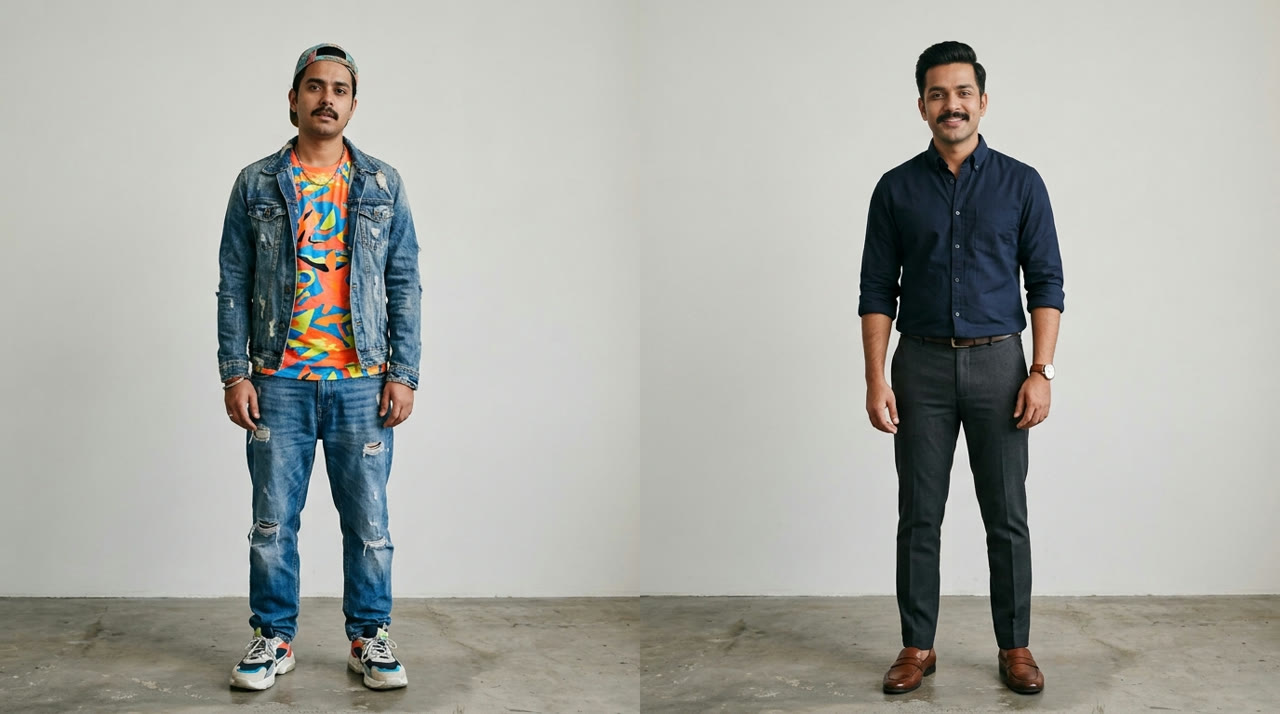
You catch yourself in a video call thumbnail and something’s off — the same graphic tee and trainers that worked at 24 now read like you never updated the wardrobe. Or you swung the other way: you dress “sensible” now, and somewhere between the pleated trousers and the loose polo shirts, you started looking like your own father.
Neither is really about age. Dressing well at any stage is about matching your clothes to where you actually are — your body, your role, your budget, your occasions — not chasing what worked a decade ago or bracing for a decade that hasn’t arrived yet. Most style advice online skips this: it’s either “wear whatever you want” (true, but useless) or a 25-year-old’s checklist applied to a 45-year-old’s life, which is worse.
This is a decade-by-decade guide for Indian men — 20s, 30s, 40s, and 50s and beyond — covering exactly what to keep, what to retire, and how to elevate the basics you already own, so every stage looks like a deliberate choice, not a decline.
Why dressing for your age isn’t about looking older
Ask ten men what “dress your age” means and eight will describe it as a warning — stop wearing what you wore in college before people start laughing. That’s backwards. The men who actually look sharp at 45 aren’t dressing older than the men who look sharp at 25 — they’re dressing correctly for their own build, their own role and their own life, right now.
Two things go wrong on either side of this. Younger men often keep wearing clothes built for a body, budget and social context they’ve outgrown — oversized streetwear, heavily branded pieces, whatever’s cheapest and trending. Older men often overcorrect into “sensible” — shapeless trousers, boxy shirts, colours picked to disappear rather than flatter — and end up looking like they’ve given up, not grown up.
The actual rule: your clothes should reflect your current body, your current role and your current confidence — never a costume for an age you think you’re supposed to perform. That’s also precisely what changes decade to decade, which is why the guidance below is specific rather than generic.
Once you know your actual body type, face shape and skin tone, dressing for your age stops being guesswork at any stage — TheGent’s Style Report reads your specific features and hands you the fit and colour rules that hold true whether you’re 24 or 54.
Your 20s: build the foundation, don’t chase every trend at once
Your 20s are for building a base, not proving you own every trend simultaneously. The biggest mistake at this age usually isn’t dressing badly — it’s dressing inconsistently, mixing several aesthetics in one outfit because the budget for a considered wardrobe hasn’t arrived yet.
- Keep: your willingness to experiment with colour, silhouette and trend — this decade has the fewest rules and the most room to work out what actually suits you.
- Retire: free event T-shirts, heavily logoed streetwear worn head-to-toe, and shoes with visibly worn-out soles — these read as “haven’t upgraded” rather than “budget-conscious.”
- Invest first in: two or three well-fitted shirts for work or interviews, one properly tailored pair of trousers, one versatile jacket, and one clean pair of leather shoes alongside your trainers.
- The rule that matters most: fit beats trend, even now. A ₹700 shirt tailored to your shoulders looks better in every photo than a ₹4,000 shirt bought two sizes wrong.
This is also the easiest decade to learn your actual proportions rather than your feed’s proportions — the earlier you know what you’re genuinely working with, the less money you waste guessing for the next thirty years.
Get all of this decided for your exact features
Everything here is general. Your TheGent Style Report turns your own face shape, body type and skin tone into a personal system — 2 hairstyles, fit rules, a 23-colour palette and 28 outfits built for you, in 48 hours.
Get your Style Report →Your 30s: fit and tailoring start doing the heavy lifting
Your 30s usually bring three changes at once: more visibility at work, a body that’s quietly shifting even if the scale hasn’t moved much, and — finally — a budget that can afford quality over quantity. This is the decade fast-fashion habits stop paying off.
- Keep: the pieces from your 20s that were properly tailored — a good white shirt, dark denim and a navy blazer age well and only need refreshing, not replacing.
- Retire: anything heavily logoed, ripped-and-distressed denim worn to the office, and skinny fits bought for a body you no longer have — last decade’s cut on a changed frame just reads as the wrong size.
- Elevate: find one tailor you trust and use him. A ₹300–800 alteration on shoulders, sleeves and waist does more for how you look than any new purchase this decade.
- Add: one proper pair of leather shoes beyond trainers, one well-cut blazer that isn’t part of a suit, and knitwear in place of hoodies for smart-casual.
The 30s rule: buy fewer things, but make sure every piece is tailored to fit you exactly. For the full decade breakdown — building a working wardrobe from the ground up — see our dedicated guide to dressing sharp in your 30s.
Your 40s: dress for the body and the role you actually have now
By your 40s, the body that carried you through your 20s and 30s has usually changed — a fuller midsection, a little less hair, sometimes a fair bit less. None of that requires dressing down. It requires dressing for the frame you have this year, not the one in old photos.
- Keep: classic silhouettes, quality fabric, and any tailoring habit you built in your 30s — this is the decade it really starts to show.
- Retire: slogan T-shirts, novelty socks worn as a personality trait, overly trend-driven pieces bought to keep pace with juniors at work, and skinny-fit anything if your build has changed.
- Elevate: invest in one proper overcoat or field jacket for winter, move your everyday trouser from cheap synthetic blends to wool or cotton-blend tailoring fabric, and treat grooming — beard, eyebrows, greying hair — as part of the outfit, not separate from it.
- If your body has changed noticeably — a fuller midsection especially — cut and rise matter more than the size on the label; the same silhouette rules apply whether you’re 25 or 45.
The 40s rule: authority reads through quality, not trend. A well-cut, well-fitted basic in a good fabric will outdress a “young” trend piece worn slightly wrong, every time.
Your 50s and beyond: elevate, don’t disappear
Two traps show up in this decade, pulling in opposite directions. One is giving up — baggy “comfortable” clothing, elastic waists, colours picked to be invisible. The other is overcorrecting — chasing 25-year-old trends like distressed denim or oversized streetwear to feel current. Both read the same way from across a room: uncertain.
- Keep: tailoring as a habit, not an occasional treat, and quality fabric — cashmere-blend knitwear, proper wool trousers, real leather footwear. These read as intentional at any age.
- Retire: low-rise or skinny denim, anything with visible distressing or rips, novelty prints, and shoes that haven’t seen a cobbler in a decade.
- Elevate: a well-cut overcoat, a proper watch, and quality leather goods — belt, wallet. Accessories carry more weight in this decade because they signal deliberate choice rather than convenience.
- Denim, if you still wear it: a straight or gently tapered mid-rise cut in a darker wash reads current without trying. Our guide to the right jeans for older men covers the exact cuts and washes that work.
The rule for 50s and beyond: comfort and sharpness aren’t opposites. The right cut in a good fabric is more comfortable than a baggy one, and looks like you’re still paying attention.
The retire-by-decade checklist
A fast reference if you take only one thing from this article — the pieces that quietly stop working, decade by decade.
- By 30: free event T-shirts, worn-out trainers, ripped denim worn to work, anything two sizes wrong.
- By 40: heavily logoed streetwear, skinny fits on a changed frame, cheap synthetic trousers, novelty graphic tees.
- By 50: low-rise or distressed denim, boxy unstructured suits, shoes that haven’t been resoled, colours chosen to disappear rather than flatter.
- At any age: anything that doesn’t fit correctly right now, regardless of what it cost or how new it looks.
Footwear ages an outfit faster than most men realise. Our decade-by-decade breakdown on choosing shoes for your age covers exactly what to wear and what to retire.
Common age-dressing mistakes Indian men make
A few patterns show up repeatedly, across income brackets and cities.
- Dressing for the wedding-and-festival calendar only. Many Indian men own one sharp festive wardrobe and one lazy everyday one. Both matter — colleagues and dates see the everyday version far more often.
- Buying “age-appropriate” as a synonym for shapeless. A well-tailored shirt in a mature colour looks more current than a boxy one bought specifically because it “looks age-appropriate.”
- Ignoring fit changes after marriage or a desk job. Weight and posture shift for most men through their 30s and 40s. Wearing the same size and cut from ten years ago, unchanged, is the single most common ageing mistake — not grey hair, not wrinkles.
- Confusing expensive with correct. A ₹15,000 shirt in the wrong fit looks worse than a ₹1,500 shirt tailored properly. Budget isn’t the variable that’s failing you.
Know your decade for certain, not by guesswork
Everything above is genuinely useful on its own — decade markers are real, and the keep/retire lists will sharpen any wardrobe immediately. What they can’t do is account for your specific body, face shape and skin tone, which matter more than your birth year at every stage.
That’s the gap TheGent’s Personal Style Report closes. For ₹1,999, it reads your actual face shape, body type and skin tone — not your age bracket — and turns it into a full Style DNA: fit rules built for your current frame, a 23-colour palette for your skin tone, and 28 outfit visuals across 7 categories, delivered in 48 hours and kept in the app for life. Over 4,000 Indian men have used it, rated 4.9/5.
Your decade tells you roughly where to start. Your actual features decide the rest. Get your full Style Report and stop dressing by guesswork, at any age.
- Dressing your age means matching clothes to your current body, role and budget — not performing older or younger than you are.
- In your 20s prioritise fit over trend; in your 30s build a tailoring habit; in your 40s and 50s invest in fabric quality and correct rise over anything trend-driven.
- The single biggest ageing mistake is wearing the same cut and size you wore a decade ago, unchanged.
- Retire logoed streetwear and distressed denim by your 30s, skinny fits on a changed frame by your 40s, and low-rise or worn-out basics by your 50s.
- Your decade is a rough guide — your actual body type, face shape and skin tone decide what genuinely suits you at every stage.
Frequently asked
Wearing the same fit and cut they wore ten years ago without adjusting for a changed body, role or budget. It’s rarely about colour or trend — an unadjusted fit is what dates a man fastest.
Yes, as long as the cut is current — a straight or tapered mid-rise jean and a clean, minimal trainer, not a skinny low-rise style or anything visibly worn out. The cut and condition read as age-appropriate, not the item itself.
Review it every two to three years, or immediately after a noticeable body change such as weight, posture or muscle shift. Most men wait far too long and keep wearing clothes cut for an earlier version of themselves.
Not necessarily — it gets more selective. Fewer, better-fitted pieces in good fabric usually cost less over a year than frequent fast-fashion purchases, and wear and photograph better.
There’s no universal older-man colour palette — it depends on skin tone, not age. What does shift is fabric and finish: richer, more muted tones in better fabrics tend to read as more deliberate than very bright, flat colours.
The same fit principles apply to both — a kurta or bandhgala needs the same correct rise, length and tailoring as a work shirt. Most men only tailor their festive wear and neglect everyday clothes, which is backwards since everyday clothes are seen far more often.