 The
The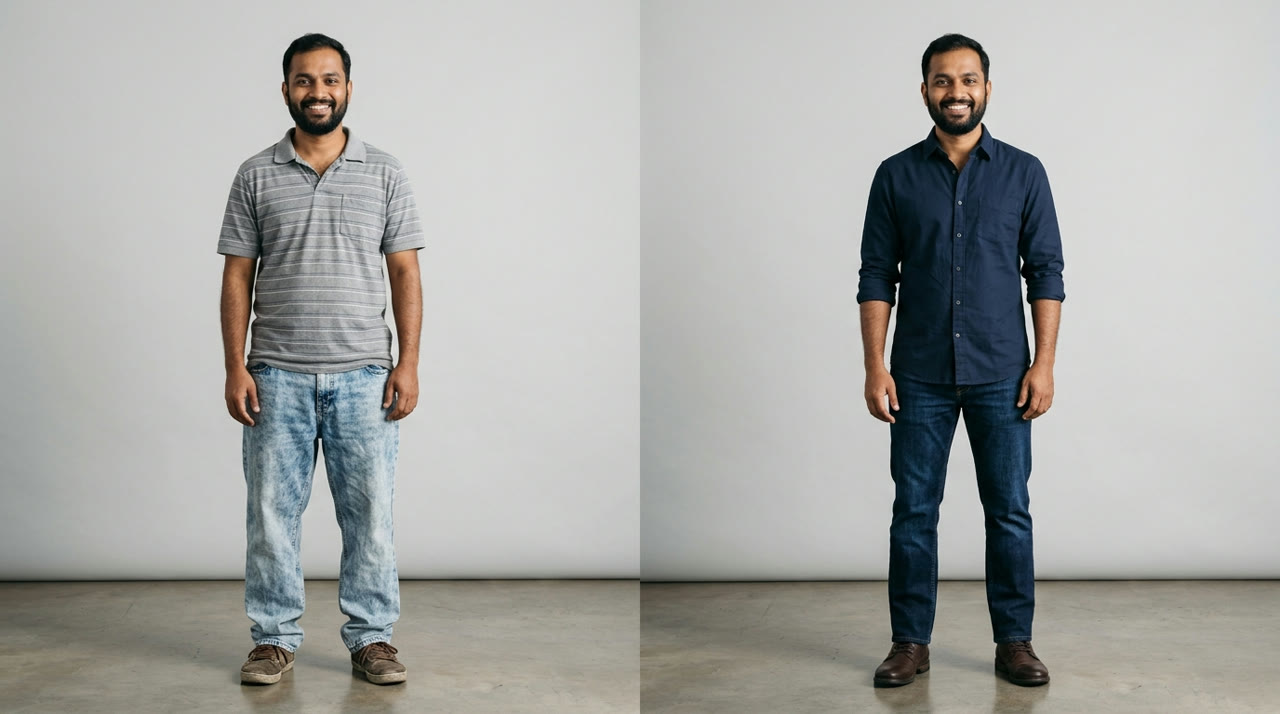
Most Indian men past 40 keep buying jeans the way they did at 25 — slim fit, low rise, faded wash — without questioning it. Then a photo from a wedding or a work trip shows what the mirror didn't: the fit pulling in the wrong places, or hanging in a way that reads older than you feel.
The fix isn't a wardrobe overhaul. It's three decisions — rise, leg shape and wash — matched to the body and the life you actually have now, plus denim that's built to hold its shape through Indian heat and long days. Get those right and jeans go back to being the easiest, most reliable piece in a smart-casual wardrobe.
Get the Rise Right First
Rise is the distance between the crotch seam and the waistband, and it decides more about how jeans look on you than fit or wash ever will. Low-rise jeans sit below the hip bones — fine on a 22-year-old, but on most men past 45 they gape at the back when you sit, and slide down through the day.
The rule: a mid-to-high rise, sitting at or just above your natural waist, is the safest choice for almost every man over 40, regardless of build. It keeps your shirt tucked in when you sit, holds everything in place without a belt doing all the work, and reads as put-together rather than dated.
- Sit down in the jeans at the shop. If the waistband gapes or your shirt pulls loose, the rise is wrong for you.
- If you carry weight around the middle, a slightly higher rise flatters more than a lower one — it's the opposite of what most men assume.
- Avoid anything labelled low-rise or super low-rise on the tag, even if the leg shape looks right.
Straight or Slim-Straight — Never Skinny, Rarely Baggy
Skinny jeans need a lean, athletic leg to hang correctly. Past a certain age, thighs and calves change shape, and skinny denim starts to pull at the seams, ride up when you sit, and generally look borrowed from someone younger.
The opposite mistake is just as common: relaxed, wide-leg jeans that pool at the ankle and add bulk you don't need. Between these two extremes sits the leg shape that works for almost every older man — straight or slim-straight, with room through the thigh and a clean line down to the ankle.
- Straight leg: roughly the same width from knee to hem, skims rather than hugs — the safest, most versatile choice.
- Slim-straight or tapered straight: slightly narrower at the ankle, good for leaner or athletic builds who want a more modern line without going skinny.
- If you're unsure which to pick, straight leg is the one that avoids both looking dated and looking like you're trying too hard.
Get all of this decided for your exact features
Everything here is general. Your TheGent Style Report turns your own face shape, body type and skin tone into a personal system — 2 hairstyles, fit rules, a 23-colour palette and 28 outfits built for you, in 48 hours.
Get your Style Report →Dark, Clean Washes Beat Distressed and Faded
Ripped knees, sandblasted whiskering, bleach patches — designed to fake a lived-in look, and fine on a younger man. On an older man, at the office, at a family function or on a first date, they tend to read differently: like an attempt to borrow a younger silhouette rather than an outfit that actually suits you.
Dark indigo or rinse-wash denim does more work for less effort. It hides the small creases that come with a long day, it's genuinely slimming, and it moves from a lunch meeting to dinner without a change of clothes — useful across a crowded, multi-stop day.
- Choose a dark, close-to-uniform wash with minimal fading at the thighs or knees.
- Skip visible rips, whiskering and bleach spots — save trend pieces for a very casual, low-stakes weekend, if you want them at all.
- One dark pair works with more shirts, more shoes and more occasions than three statement washes combined.
What Quality Denim Actually Feels Like
Cheap denim is easy to spot once you know what to check. It's usually thin — under 10oz — and loses its shape fast, with a raw, overlocked inside seam that frays quickly.
Good denim, roughly 12–14oz cotton with 2–3% elastane, holds a crease, drapes instead of clinging, and springs back into shape when you scrunch it in your hand — cheap denim stays crumpled. Check the inside leg seam for a flat, double-stitched finish, and favour tonal or subtle stitching over bright contrast top-stitching, which tends to skew younger and more casual.
- 12–14oz weight holds its shape through a full day, rather than bagging by evening.
- 2–3% stretch is enough for comfort; much more and the fabric bags at the knee within a few wears.
- Flat-felled inside seams and a sturdy zip are signs the jeans were built to last, not just to look good on a hanger.
Indian Brands and Price Ranges Worth Knowing
India's denim shelf is crowded, and most of it is still cut for men in their twenties. A few practical pointers make the shopping faster.
- Budget (₹1,200–2,200): Flying Machine, Spykar, Numero Uno, and Wrangler or Lee on sale all carry decent mid-rise straight options — check the fit carefully, as fabric weight can be lighter at this price.
- Mid-range (₹2,500–4,000): Levi's, Pepe Jeans, U.S. Polo Assn, and Uniqlo. Within Levi's, look at the 514 (straight) or 505 (regular straight) rather than the 511 — the 511 is the slim cut every store pushes first, and it's cut for a leaner, younger frame.
- Premium (₹4,500–8,000+): Blackberrys and Marks & Spencer both cut noticeably roomier through the seat and thigh, which tends to suit a mature build straight off the rack.
One more India-specific advantage worth using: a local tailor can shorten or taper almost any pair for ₹100–300 — often the difference between jeans that merely fit and jeans that look tailored.
Dressing for the Body You Actually Have Now
Here's the part most men skip: the size and shape you wore at 30 may not be the size and shape you need now, even if the number on the tag hasn't changed. Waist and hip proportions shift with age — often the waist fills out while the thighs lose some of their earlier fullness — and buying out of habit is why so many jeans end up worn low just to close comfortably.
Look for jeans described as relaxed through the seat and thigh but tapered at the ankle — room where you need it, shape where you don't. If you're between sizes, size up in the waist rather than down. A slightly looser waistband under a belt looks far better than a tight one leaving a visible line under your shirt.
This is really a fit problem, not a willpower problem — the same logic behind dressing while your body is changing more broadly. Clothes should be chosen for the frame you have now, not the one in old photographs.
Judging this by eye in a changing room is genuinely hard — exactly the problem a TheGent Style Report is built to solve. It reads your actual body type and proportions and hands you the specific fit rules for your frame, not generic advice, in 48 hours.
Styling Jeans Smart-Casual After 40
The fastest smart-casual formula for a man over 40: dark straight jeans, a solid or fine-check shirt tucked in or neatly half-tucked, and leather shoes. It works for a client dinner, a casual Friday at the office, or a weekend family lunch, without a single change.
A jacket does more for looking put-together than any single jeans purchase. A navy blazer or a good overshirt worn over dark jeans reads as effortless, not overdressed, and instantly lifts the same denim you'd otherwise wear with a plain T-shirt.
- Shoes: leather loafers, clean derbies, or a minimal neutral sneaker. Skip chunky, logo-heavy trainers — they read as trying too hard.
- Shirts: solid colours, fine checks, or a good knit polo. Save busy prints and oversized graphics for younger wardrobes.
- Belt: match it to your shoes, and size it to the rise you're actually wearing now, not the one from ten years ago.
This is also where choosing shoes for your age and how to dress for your age matter as much as the jeans themselves — one dated piece pulls the whole outfit backward.
The Bottom Line
Good denim after 40 isn't about chasing a younger silhouette or retreating into a shapeless, over-relaxed fit — it's three decisions: the right rise, a straight or slim-straight leg, and a dark, clean wash in fabric built to hold its shape. Get those three right and the rest of the outfit takes care of itself.
The one variable no article can solve for you is your own exact proportions. A TheGent Style Report reads your face shape, body type and skin tone and turns them into fit rules, a colour palette and outfit visuals built specifically for you — not a generic guide — delivered in 48 hours and kept for life in the app.
- A mid-to-high rise and a straight or slim-straight leg are the safest defaults for almost every man over 40.
- Dark, clean washes look sharper and more versatile than distressed or faded denim.
- Quality denim — 12–14oz weight, 2–3% stretch, clean stitching — holds its shape through the day.
- Fit for the body you have now: room through the seat and thigh, tapered at the ankle, not the size you wore 20 years ago.
- In India, Levi's 514/505, Uniqlo and Marks & Spencer offer better mature-fit options than the ubiquitous slim 511.
Frequently asked
A dark indigo or rinse wash is safest and most versatile — slimming, hides everyday creasing, and moves from day to evening without a change of clothes.
Generally no. Skinny jeans need a lean, athletic leg to hang correctly, and past 40 most men look and feel more comfortable in a straight or slim-straight cut.
A mid-to-high rise that sits at or just above your natural waist. It's the opposite of what most men assume, but a higher rise holds everything in place and looks tidier than a low-rise pair worn under a belly.
It's best avoided for most occasions. Heavy distressing is designed to signal youth, and on an older man it tends to read as trying too hard rather than stylish. A very slight, even fade is fine.
It depends on budget. Levi's 514 or 505 (not the slim 511), Uniqlo, and Marks & Spencer all offer straighter, roomier cuts that suit a mature build better than brands built around a slim, youth-first fit.